Gadget Guides
Quick answer: Choose a power bank by watt-hours, required USB-C Power Delivery output, port sharing and travel limits—not just the advertised mAh number. For air travel, spare lithium batteries and power banks generally belong in carry-on baggage, with 100 Wh a key threshold under widely used aviation rules.
Key takeaways
- mAh alone is not enough for comparing power banks across battery voltages; watt-hours are more useful.
- USB Power Delivery can support much higher charging power, but the charger, cable and device must all support compatible profiles.
- FAA guidance allows most lithium-ion batteries up to 100 Wh in carry-on baggage; 101–160 Wh generally requires airline approval.
- A high-wattage USB-C port matters if you want to charge a laptop, not only a phone.
Start with energy capacity: understand watt-hours
Power banks are commonly marketed in milliamp-hours (mAh), but watt-hours (Wh) provide a better indication of stored energy because they account for voltage. Airlines also use Wh to classify lithium-ion battery limits.
If a manufacturer lists only mAh and nominal voltage, watt-hours can be estimated as Wh = Ah × V. Real usable output will be lower than the battery’s theoretical stored energy because voltage conversion and electronics introduce losses.
Match output power to the device
A phone may charge quickly from a modest USB-C PD output, while a performance laptop can require much more. The useful question is not ‘Does it have USB-C?’ but ‘What power profiles can this USB-C port deliver?’
USB-IF states that USB Power Delivery 3.1 can support power levels up to 240 W over compliant full-featured USB-C cables and devices. That is the top of the specification, not a promise that every USB-C product supports it.
USB-C does not guarantee the same capabilities
The USB Type-C connector describes the connector form, not automatically the data speed, video capability or charging power. A USB-C product can support different combinations of USB data, Power Delivery and alternate modes.
Read the specification table for each port. On multi-port power banks, also check how total output is divided when more than one device is connected.
Airline rules: the 100 Wh threshold matters
FAA guidance says spare lithium-ion batteries and power banks must be carried in carry-on baggage rather than checked baggage. Batteries rated 0–100 Wh are generally allowed for passenger use; 101–160 Wh batteries require airline approval, while batteries above 160 Wh are generally not permitted for passengers.
Airlines and countries can apply additional restrictions, so check the carrier’s current rules before travel. Protect terminals from short circuit and keep damaged or recalled batteries out of your luggage.
A practical buying checklist
For a phone-first power bank, prioritize portability, reliable USB-C PD and enough capacity for your normal day. For tablets and laptops, prioritize sustained USB-C output, adequate Wh capacity and a cable rated for the power you expect to use.
Also consider weight, warranty, thermal protections and whether the product clearly states regulatory markings and electrical specifications.
- Capacity in Wh and mAh.
- Maximum USB-C PD output per port.
- Total output when several ports are used.
- Input wattage for recharging the power bank.
- Cable rating required for maximum power.
- Weight and travel suitability.
- Warranty and safety documentation.
Related reading
Frequently asked questions
Is 20,000 mAh allowed on a plane?
Often yes, but the deciding specification is watt-hours rather than mAh alone. Check the printed Wh rating and the airline’s current policy.
Can every USB-C power bank charge a laptop?
No. The power bank needs a compatible USB Power Delivery profile and sufficient wattage for the laptop.
Can a power bank go in checked luggage?
FAA guidance says spare lithium batteries, including power banks, must be carried in carry-on baggage.
Sources and further reading
Editorial note: This is a research-based buying guide, not a hands-on review of a specific power bank. Airline and manufacturer rules can change; verify them before purchase or travel.
Continue exploring: Before the upgrade: a smarter gadget checklist and our editorial standards.
Keep exploring Gadget Guides
 Gadget Guides
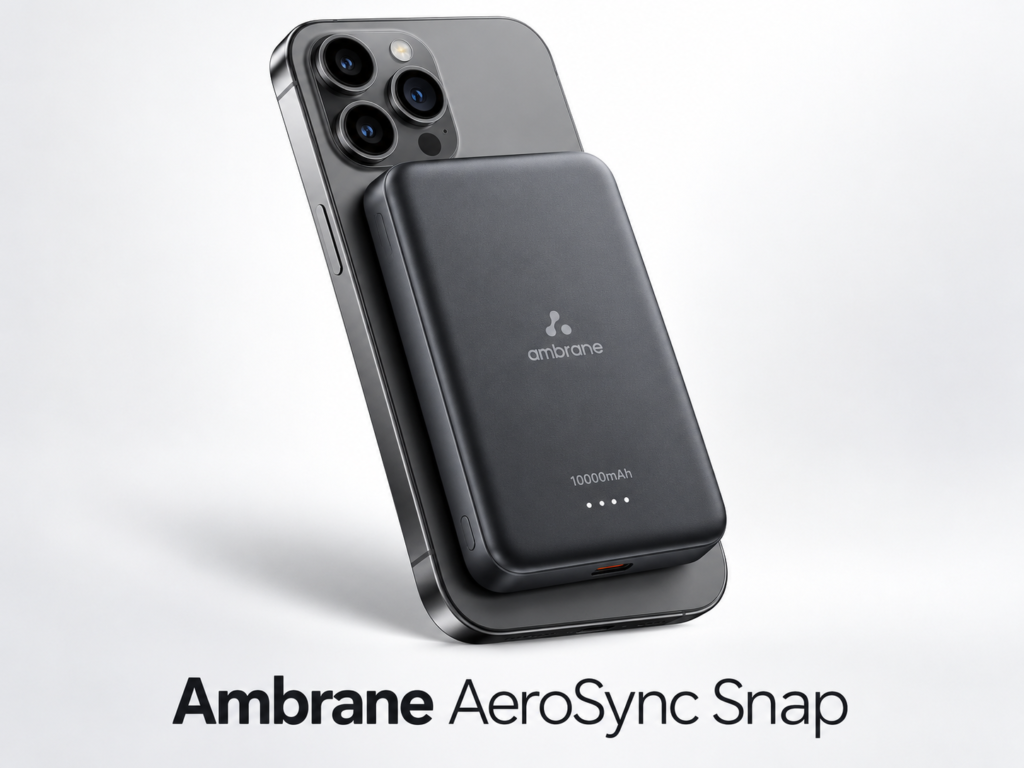
Best Magnetic Power Banks in 2026: 3 Practical Picks
Compare three 10,000mAh magnetic power banks for charging speed, portability and everyday use, with direct Amazon product links and buying advice.
 Gadget Guides
MacBook Air M4 for AI & Coding: Is 16GB Enough?
A practical MacBook Air M4 buying guide for AI-assisted work, coding and content creation, with direct Amazon links and accessory recommendations.