Answer first: A SaaS backup strategy is credible only when the team can restore a real customer workflow, measure data loss and downtime, and document what failed. Run isolated restore drills, compare observed recovery point and recovery time with business-approved objectives, and repeat after significant architecture changes.
This guide focuses on operational recovery evidence rather than backup-product shopping. It complements VIG’s production deployment checklist, production monitoring overview, and quality assurance workflow.
- Authorize incident and access recovery credentials
- Restore keys, networking and isolated compute
- Restore authoritative database and object files
- Reconcile queues, webhooks and external side effects
- Validate tenant permissions and customer workflows
- Approve traffic cutover, monitor and communicate
Define what recovery means before choosing a backup tool
A backup is a stored copy; recovery is the verified ability to resume an acceptable service. Write down the business transaction that matters, such as creating an invoice or accepting a customer request, before discussing snapshots. Record the systems involved: application database, object storage, identity provider, queue, secrets, DNS, and any external processors. A successful database restore alone does not prove that customers can sign in or that background jobs can complete. Identify an owner for each dependency and a substitute owner for holidays. Document the minimum safe service: perhaps read-only access is acceptable temporarily, while incorrect invoices are not. Ask the product team which operations can be paused without breaching customer commitments. That conversation determines recovery priorities more reliably than copying a vendor’s generic retention setting.
Set RPO and RTO without confusing them
Recovery point objective (RPO) describes the maximum tolerable loss of recent data, measured backward from disruption. Recovery time objective (RTO) describes the target time to restore an acceptable service. They are planning objectives, not guarantees. If the latest usable backup is four hours old, a stated 15-minute RPO has not been achieved. Likewise, a restore script that finishes in 20 minutes may still miss a one-hour RTO if verification, DNS changes, and customer access require another hour. Assign separate targets to customer-facing workflows when their consequences differ. Include dependencies and human decision time in the recovery clock. Record whether targets apply to a single tenant, one region, or a complete provider outage; those scenarios produce very different answers.
Inventory data and recovery dependencies
List every stateful component, not just the main SQL database. Common omissions include uploaded files, webhook delivery state, customer-specific configuration, audit events, search indexes, and encryption keys. Some artifacts can be regenerated safely; others cannot. Mark each item as authoritative, derived, or external. For authoritative data, specify the backup mechanism, storage destination, retention window, restore method, and test evidence. For derived state, document how to rebuild it and whether rebuilding could replay actions. External integrations require a separate reconciliation plan because a restored database cannot reverse a payment already processed by a partner. Avoid placing a full secrets export inside a widely accessible recovery document. Instead, document secure access procedures and key recovery responsibilities.
Build a recovery dependency map
Draw the order in which services must become available. For example, identity and key access may be prerequisites for database decryption, and the database may be needed before workers can safely resume. Do not simply restart every worker after restoring a snapshot. Queued messages may be duplicated, delayed, or inconsistent with the restored state. Reconcile message offsets and webhook receipts before resuming side effects. A clear dependency map reduces the temptation to improvise under pressure and lets the team test smaller components independently. Make the diagram readable in plain HTML so a mobile reader and screen reader can follow it.
Choose backup copies and isolation deliberately
Separate backup availability from production availability. Copies under the same credentials and administrative boundary can be deleted together. Consider retention and immutable or otherwise protected copies where the platform supports them, and test who can initiate deletion. Encrypt backups in transit and at rest, but plan for key access during a disaster. A perfectly encrypted backup is unusable if its only decryption key was lost with production. Define access by role, log restore operations, and keep test environments segregated from production. Use synthetic or appropriately protected data in drills; copying real customer information into an open test workspace creates a new incident. Evaluate the trade-off between frequent backups, storage cost, operational complexity, and actual recovery needs rather than maximizing frequency without evidence.
Design the restore drill as a repeatable experiment
A useful drill starts with a written hypothesis: given a named failure scenario, the team can restore a specified workflow within agreed objectives. Select a backup without assuming it is the newest. Capture the time of the last valid transaction, the start of the incident clock, the restore initiation, and the first successful end-to-end customer journey. Use a segregated environment and documented permissions. Record the exact backup identifier and software version, then validate schema migrations and application compatibility. Verify data counts and representative records, but also execute an application-level workflow. A test that only reports ‘restore command exited zero’ is incomplete. End with a signed result, unresolved risks, and an owner for each corrective action.
| Evidence | Question | Owner |
|---|---|---|
| Backup ID and timestamp | Which exact copy was restored? | Data lead |
| Clock timestamps | What were observed RPO and RTO? | Incident lead |
| Application journey | Could a user complete the core task? | Product QA |
| Tenant boundary | Were cross-tenant reads denied? | Security |
| External reconciliation | Were side effects safely reconciled? | Integrations |
Use a clearly hypothetical drill calculation
Suppose a fictional SaaS platform promises an internal RPO target of 30 minutes and RTO target of 120 minutes for a regional database failure. Its last recoverable snapshot precedes the incident by 18 minutes. Detection and authorization consume 22 minutes, infrastructure setup 28, data restore 36, validation 24, and traffic cutover 18. The hypothetical recovery time is 22 + 28 + 36 + 24 + 18 = 128 minutes. The observed recovery point is 18 minutes old, so the hypothetical RPO target is met but the RTO target is missed by eight minutes. Do not treat these numbers as benchmarks or vendor performance claims. The corrective action might be to parallelize infrastructure preparation and validation, then rerun the drill. Changing a target to match a poor result without business approval would hide rather than resolve the gap.
Validate integrity and customer outcomes
Validation should answer whether restored data is trustworthy and whether users can complete the promised task. Check relational integrity, application migration versions, object references, tenant boundaries, and audit continuity. Test at least one account with minimal privileges and one representative administrator role. Confirm that authorization rules still prevent cross-tenant reads. Verify that jobs with external side effects are not replayed blindly; reconcile against processor receipts and idempotency records first. Inspect error logs and telemetry after traffic returns, since a superficial health check can miss a broken customer journey. If a restore requires dropping recent writes, identify affected accounts and create a reconciliation plan before telling customers that recovery is complete.
Assign incident roles and communication rules
A drill works better when the incident commander, technical recovery lead, security reviewer, customer communications owner, and decision authority are known in advance. In a small team, one person may hold several roles, but critical decisions should still be documented. Set escalation triggers for missed objectives and unclear data integrity. Write a status update that separates what is known from what remains unverified. Do not promise a recovery time that has not been demonstrated. After the exercise, hold a blameless review that records the timeline, observed bottlenecks, evidence, and next actions. The companion VIG guide on incident communications covers how to structure external updates; this article concentrates on proving restoration capability.
Build a practical scorecard
Measure the drill from first detection to verified customer workflow, not merely from backup selection to command completion. Track observed RPO, observed RTO, backup readability, application validation, tenant authorization checks, and the number of manual steps requiring undocumented knowledge. Compare results to the specific scenario’s targets. If an objective fails, distinguish an architecture constraint from a documentation or staffing issue. Repeating an identical successful drill is less valuable than gradually testing new failure modes: accidental deletion, corrupt snapshots, unavailable region, lost credentials, and dependency failures. Keep the scorecard versioned so improvements can be demonstrated without inventing success percentages.
Schedule drills based on change and risk
A calendar-only policy can miss meaningful changes. Trigger additional tests after a major database migration, new storage system, encryption-key rotation, significant tenant growth, or architectural shift. The right cadence depends on business criticality and operational risk; there is no universal safe interval. Maintain a minimal monthly review of backup job failures even if full restores happen less often. For every production change, ask whether the recovery instructions, permissions, and test fixtures still work. Budget time for remediation and a follow-up drill. A backlog of unresolved drill failures is a stronger warning signal than an attractive dashboard showing backups completed.
Frequently asked questions
Does a green backup dashboard prove disaster recovery? No. It proves only what the dashboard checks, often that backup jobs ran. A tested restore and verified business workflow provide stronger evidence. Can a restore drill run in production? Production exercises may be appropriate for mature teams with explicit safeguards, but isolated drills are usually a safer starting point. Are RPO and RTO the same for every tenant? Not necessarily; service commitments and data criticality can vary, but the architecture must actually support the chosen distinctions. Should a company delete old backups immediately? Follow retention, legal, contractual, and security requirements rather than a generic rule. What should the first drill test? Start with a representative, bounded failure scenario that the team can execute safely and measure honestly.
Further reading and reference documentation
Review the AWS Well-Architected disaster recovery guidance, Google SRE operational guidance, and NIST SP 800-34 contingency planning guidance. These sources explain recovery planning principles; they do not certify any particular SaaS deployment.
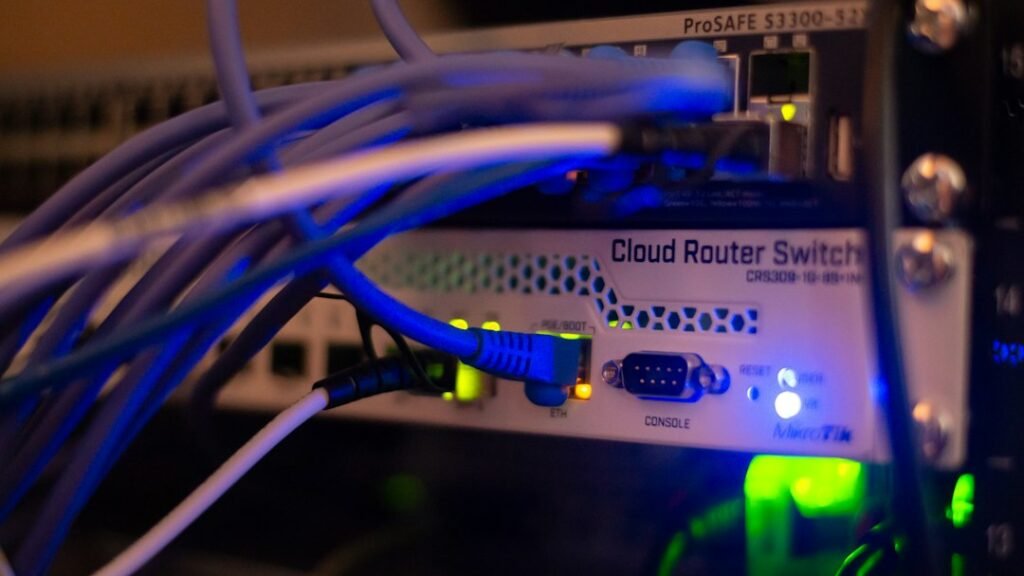
Featured photograph: Albert Stoynov, Unsplash. All calculations and workflows above are editorial illustrations, not results from a tested production system.
Keep exploring AI
 AI
LLM Model Fallback Routing for SaaS: Reliability, Latency Budgets and Quality Gates
Design safe LLM model fallback routing for SaaS with error classification, quality gates, bounded latency, circuit breakers, and hypothetical cost examples.
 AI
Structured LLM Outputs for SaaS: JSON Schemas, Validation and Failure Handling
Design reliable structured LLM outputs with JSON Schema, semantic validation, refusal handling, bounded retries, versioned contracts and human-review gates.