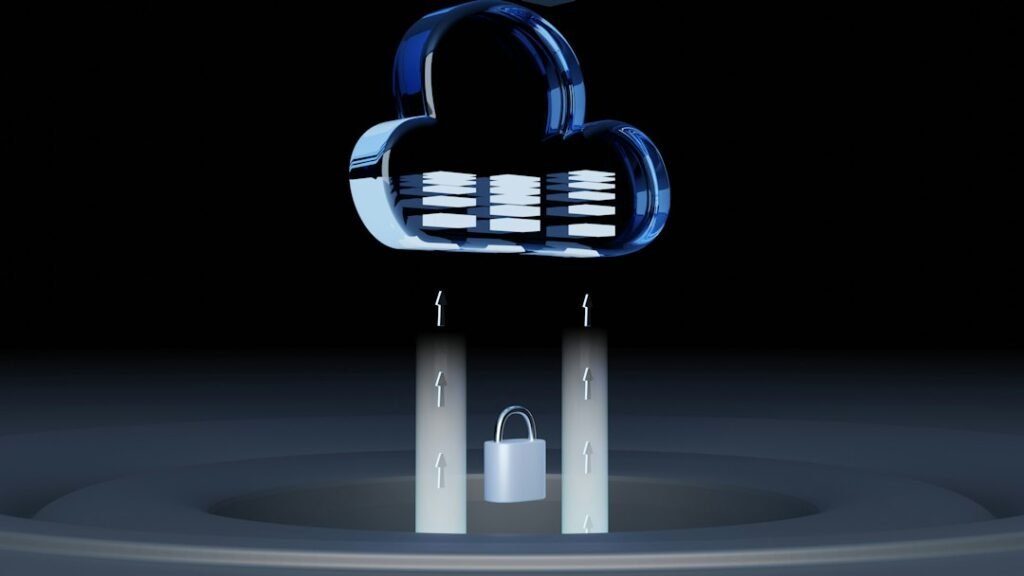
Quick answer: SaaS tenant isolation means one customer cannot read, modify, infer, or disrupt another customer’s protected resources merely because the customers share an application. The design starts with trustworthy tenant identity, applies authorization at every data boundary, and proves the boundary with negative tests. A separate database can help, but separate databases alone do not solve incorrect routing, shared caches, background jobs, or leaked exports.
This guide is for SaaS product teams deciding how to protect customer data while controlling operational complexity. It is an architecture and testing framework, not a claim that any particular implementation is compliant or penetration-tested.
Tenant isolation is not the same as authentication
Authentication answers who is making a request. Tenant isolation answers which organization’s data and operations that identity may reach. A signed-in user can still be unauthorized to access another organization’s invoice, document, project, search index, or queued job. Role-based permissions within one tenant are another distinct concern: an administrator and a viewer may both belong to the same tenant but have different capabilities.
Write these three facts separately in your design: the authenticated principal, the tenant context selected for the operation, and the authorization decision for the target resource. Treat a tenant identifier supplied by the browser as a request to validate, not as proof of authority. This matters especially for users who legitimately belong to multiple organizations: the selected organization must be checked against their memberships for every relevant action.
Choose a deployment model without confusing it with a guarantee
The AWS tenant-isolation whitepaper describes silo, pool, and bridge patterns. A silo gives a tenant separate resources, a pool shares resources with logical separation, and a bridge combines the two. Each can be defensible when its controls match the risk and are actually enforced. A separate environment is easier to explain to some buyers, but it adds provisioning, upgrades, monitoring, and incident-response work.
| Model | Typical boundary | Primary advantage | Operational question |
|---|---|---|---|
| Silo | Dedicated account, compute or database per tenant | Clearer resource separation | Can you reliably deploy and patch many environments? |
| Pool | Shared service and storage with tenant-aware policies | Efficient shared operations | Does every access path enforce the tenant boundary? |
| Bridge | Shared application plus selected dedicated components | Targeted isolation for sensitive workloads | Can teams explain and test the mixed boundaries? |
Choose per component, not only per customer tier. For example, the API tier might be pooled while regulated document storage is siloed. A search index may require separate tenant partitions even if the application database is shared. A premium plan should not automatically be equated with security; all plans need an appropriate isolation baseline.
Map the complete data path before choosing controls
- Identity: authenticate user or service and resolve memberships.
- Request: validate selected tenant against membership and operation.
- Authorization: evaluate resource ownership and action permissions.
- Storage: constrain queries, object keys, and indexes to authorized tenant scope.
- Async processing: carry trusted tenant context through queues and scheduled jobs.
- Response: ensure caches, downloads, logs, and exports cannot cross tenant boundaries.
Draw this map for each user-visible feature, including file uploads, reporting, full-text search, email notifications, and support tooling. A system diagram that stops at the primary database is incomplete: data often leaves the request path through a queue, analytics pipeline, temporary export, or shared cache. These secondary copies may be less visible to the product team than the primary tables.
Enforce tenant identity at the service boundary
Resolve tenant membership from trusted identity and authorization records. If the request includes an organization slug, verify it maps to an organization the principal may use. Bind the validated tenant to the server-side request context; avoid repeatedly reading an untrusted header in deeper services. Service-to-service calls also need an authenticated caller and an explicit authorized tenant scope, rather than a generic internal-service bypass.
Design the authorization rule in ordinary language first: “A user can read a document only if the user has access to the document’s tenant and the document’s own permissions allow the read.” Then implement that rule in a reusable service layer and test it independently of the UI. Do not rely on hiding buttons. When a membership is revoked, consider active sessions, queued jobs, cached authorization decisions, and long-lived download links.
Protect pooled relational data with defense in depth
In pooled storage, each tenant-owned row should carry a trustworthy tenant key or be reachable through a relation that enforces ownership. Application queries should include tenant scope even for count, search, update, and delete operations. Where supported and correctly configured, database row-level security can add a second boundary; it does not excuse incorrect role configuration or privileged connections that bypass policies.
Beware of a common failure: the read endpoint filters by tenant, but an update endpoint looks up a record by a globally unique ID without verifying ownership. Another failure occurs when an administrator reporting query joins two tables and drops a tenant predicate. Design repository interfaces so tenant scope is required rather than optional. Treat cross-tenant joins as exceptional, reviewed operations, not convenient defaults.
For object storage, bind uploaded objects to an immutable tenant owner and authorize every download. A file path containing a tenant slug is not itself an access-control policy. Signed URLs need sensible expiry and must be issued only after authorization; expiry limits exposure but does not prevent a link from being shared while valid.
Review caches, search, and background jobs explicitly
Shared caches can leak information if keys omit tenant identity or relevant authorization scope. For example, caching dashboard:overview for every organization is unsafe if the result is tenant-specific. A safer conceptual key is dashboard:{tenant_id}:{scope}:{version}, with cache invalidation and access checks designed together. Do not place sensitive tenant identifiers in public client-visible logs simply to debug a cache.
Search systems deserve separate attention. Query filters, index partitions, vector-search metadata, and document-level authorization should agree. A correct database check is irrelevant if the search result contains another tenant’s snippet before the check runs. Similarly, queue messages should carry validated tenant context and workers should verify the operation they are about to perform. Retry or dead-letter handling must not silently drop the tenant field.
These concerns connect to VIG’s broader production deployment checklist: a release is not complete until operational paths and failure modes are covered. For AI-enabled document search, the RAG architecture decision guide provides additional context, although retrieval permissions require their own review.
Build a negative-test matrix, not just happy-path tests
The OWASP authorization regression testing guidance includes cross-tenant boundary tests. In a non-production test environment, create Tenant Alpha and Tenant Beta, seed distinct records, and assert that a Beta principal cannot retrieve, update, export, or discover Alpha resources. Test APIs directly; UI tests alone miss authorization gaps. Cover pagination, search suggestions, file previews, exports, and background jobs.
| Operation | Expected allowed case | Required denial case |
|---|---|---|
| Read record | Member reads own tenant record | Same member requests another tenant’s record ID |
| Edit record | Editor updates authorized object | Editor changes foreign object’s ID in request |
| Search | Search returns authorized snippets | Foreign tenant term reveals no foreign content |
| Export | Export contains authorized tenant rows | Altered filter cannot export another tenant |
| Cache | Repeat requests return correct scoped result | Switching tenants never returns previous tenant data |
| Job | Worker processes approved tenant payload | Forged or missing tenant context is rejected |
Use separate identities with realistic roles. Also test a person belonging to both tenants, because a legitimate multi-tenant member may accidentally retain the wrong active organization after switching tabs. Re-run the matrix after changes to ORM queries, caches, authorization libraries, indexing, and asynchronous processing. Capture test evidence and ownership so failures cannot be silently ignored.
A hypothetical cost and risk decision
Illustrative scenario only: a fictional SaaS product serves 40 small organizations and two customers requiring dedicated databases. Suppose pooled database operations cost 12 engineer-hours per month, while each dedicated environment adds an estimated 1.5 hours of patching and verification. Under these invented assumptions, operating two dedicated environments adds 3 hours monthly, bringing the total to 15 hours. This is not a market benchmark or actual provider pricing.
The correct decision is not “dedicated is three hours more expensive.” Ask what risk or contractual need the dedicated boundary addresses, how tenant-specific backups work, and whether support staff can still accidentally access the wrong customer. A shared database with strong tested controls may be appropriate for one workload; a dedicated database may be justified for another. Measure the operational burden using your own deployment records and incident history, not arbitrary averages.
Incident readiness: design for evidence and containment
Define what the team does when a potential cross-tenant exposure is reported. Preserve relevant request IDs and access-decision records without logging secrets. Identify affected tenants, the exact resource types, and whether exposure was read-only or involved mutation. A kill switch for a risky feature may help contain the issue, but it should not be the only control. Practice the escalation path before a real incident.
Access logs need enough context to support investigation: principal, validated tenant, action, resource class, decision, and correlation ID. Restrict access to those logs because they may themselves contain sensitive operational metadata. Include customer-support impersonation and emergency administration in the threat model; privileged support workflows should be narrow, auditable, and time-bounded.
A 10-point tenant-isolation implementation checklist
- Define tenant, workspace, user, and resource ownership unambiguously.
- Document where trusted tenant context originates.
- Require tenant authorization for every read, write, export, and search.
- Scope pooled queries and review privileged database connections.
- Protect object storage and time-limited downloads.
- Partition cache keys and validate cache invalidation.
- Carry validated context into jobs, retries, and scheduled tasks.
- Test negative cases with at least two separate tenants.
- Audit support access and record denial decisions safely.
- Assign an owner to review isolation after architecture changes.
Questions teams ask
Does a separate database guarantee isolation?
No. Incorrect routing, application authorization, shared caches, exports, or privileged support tools can still expose information. Dedicated storage changes the boundary, not the need to test it.
Is a tenant ID in a JWT sufficient?
Not by itself. Validate the token, its audience and lifecycle, the user’s current membership, and the authorization for the specific resource and action. Membership changes may require refreshed claims or server-side checks.
Should a small SaaS startup use silo or pool?
Start with workload and customer requirements, then compare isolation controls and operational cost. The best choice is the one the team can explain, enforce, and repeatedly verify; size alone is not the deciding factor.
How often should isolation be tested?
Run relevant automated regression tests in the delivery pipeline and add focused reviews whenever authorization, storage, indexing, caching, or worker architecture changes. High-risk operations warrant stronger independent assurance.
Final recommendation
Tenant isolation is an end-to-end product property, not a checkbox on a cloud architecture diagram. Make tenant identity explicit, keep authorization close to each resource, and use adversarial negative tests as release evidence. Pair this approach with the broader AI and workflow readiness considerations when SaaS features begin delegating actions to agents. A reliable boundary is one that still holds when a request is malformed, a cache is warm, a job is retried, or a customer switches organizations.
Featured photograph: Growtika via Unsplash. Architectural references: AWS SaaS Tenant Isolation Strategies and OWASP Authorization Regression Testing. All calculations above are fictional illustrations.
Keep exploring AI
 AI
LLM Model Fallback Routing for SaaS: Reliability, Latency Budgets and Quality Gates
Design safe LLM model fallback routing for SaaS with error classification, quality gates, bounded latency, circuit breakers, and hypothetical cost examples.
 AI
Structured LLM Outputs for SaaS: JSON Schemas, Validation and Failure Handling
Design reliable structured LLM outputs with JSON Schema, semantic validation, refusal handling, bounded retries, versioned contracts and human-review gates.