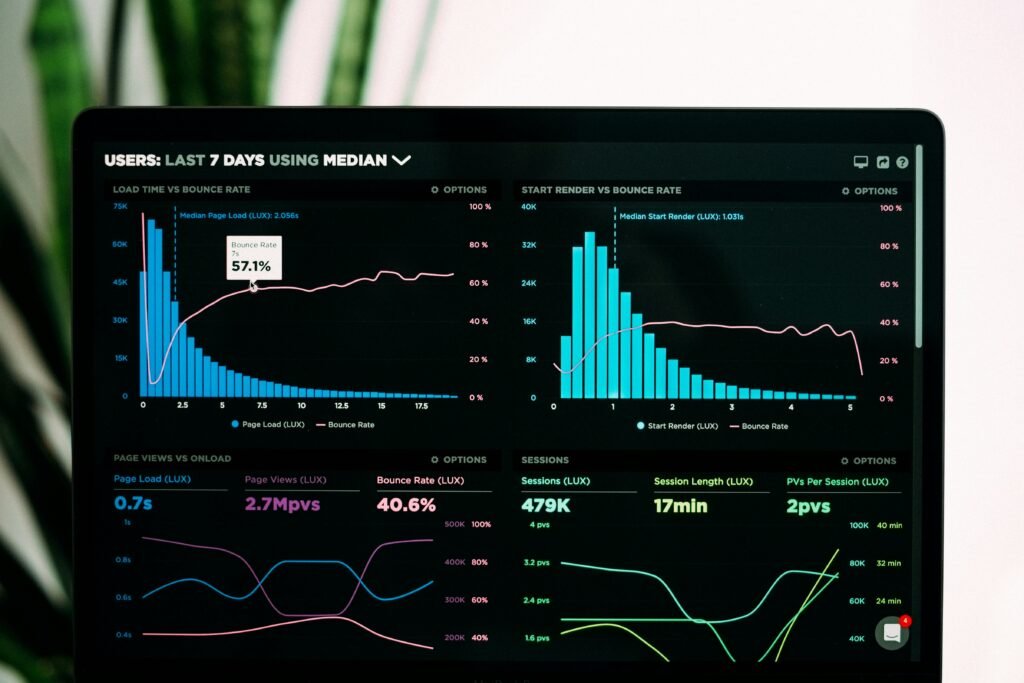
Quick answer: Google AI Mode SEO is not a separate replacement for SEO. The strongest 2026 strategy is to make important pages technically crawlable, easy to understand, clearly attributable, genuinely useful, visually well supported and strong enough to deserve inclusion across classic Search and generative AI experiences.
The biggest change in 2026 is measurement. AI-search visibility is becoming easier to observe, which means publishers can stop treating GEO as a vague branding exercise and start managing it like a real acquisition channel.
What changed in Google AI Search in 2026?
Three shifts matter most for publishers, marketers and SEO teams.
1. Generative AI visibility became measurable
Search Console now provides dedicated reporting for generative AI experiences in Search and Discover. That gives site owners a way to examine AI-related visibility across pages, dates, countries and devices instead of relying only on manual screenshots or anecdotal citation checks.
This changes the reporting model. A modern search dashboard should now separate at least three channels:
- Traditional Google Search: clicks, impressions, CTR and average position.
- Google generative-AI visibility: the pages and topics appearing in AI-driven search experiences.
- External AI-assistant referrals: qualified sessions arriving from tools such as ChatGPT Search.
Classic rank tracking still matters, but it no longer tells the whole discovery story.
2. Publishers have more control over generative-AI inclusion
Website owners can now make an explicit decision about whether their content should be eligible for Google’s generative AI experiences. For a publication that wants AI-search reach, this creates a simple but important technical check: make sure you have not accidentally opted out of the exact surfaces you are trying to grow.
3. Multimodal search became a measurable discovery channel
Search behavior increasingly includes images, camera input and visual search flows such as Lens-style discovery. For technology, ecommerce, travel, fashion, food and product publishers, this means images are no longer only decoration or social thumbnails. They can become discovery assets.
That is especially relevant for Vector Insight Global’s gadget and buying-guide content, where a representative product image, a clear comparison visual or a port-layout diagram can answer part of the user’s question before they read the full article.
There is no magic “AI SEO” switch
The wrong response to AI search is to publish hundreds of thin pages labelled “GEO optimized.” The better response is to strengthen the same qualities that make information useful to readers and retrieval systems.
- A clear answer to a defined question.
- Original or non-commodity value.
- Strong topical context.
- Precise entities, product names and concepts.
- Transparent authorship and publisher identity.
- Crawlable HTML and clean internal linking.
- Representative images and video where they add information.
- Accurate structured data.
- Current facts and dates.
- Language that can be quoted without losing its meaning.
AI systems need information they can understand, trust and reuse. Search engines need the same thing.
A practical AI-search measurement framework
Do not judge AI visibility with one metric. Use a layered framework so you can separate awareness from traffic and traffic from revenue.
Layer 1: Generative-AI visibility
Start by establishing a baseline for pages that already receive AI-search exposure. Track:
- Total AI-related impressions or visibility signals available in Search Console.
- Pages receiving that exposure.
- Countries where it appears.
- Device mix.
- Weekly and monthly trend.
The purpose is not to chase a vanity number. It is to identify which page types Google already trusts enough to surface in answer-driven experiences.
If detailed comparison guides repeatedly earn AI exposure while generic listicles do not, that is a strategic signal. Expand the useful format rather than increasing publishing volume blindly.
Layer 2: Compare AI-visible pages with classic Search
Cross-reference AI-visible pages with normal Search Console performance.
Look for:
- High impressions but weak CTR.
- Positions roughly 5–20 with strong topical relevance.
- AI visibility but low classic clicks.
- Classic clicks but little AI exposure.
Each gap suggests a different action. A page with search demand but weak AI visibility may need a stronger answer block, clearer entity relationships or more distinctive evidence. A page that is surfaced in AI but receives few clicks may need a better title, clearer commercial intent match or a stronger reason to visit the source.
Layer 3: Measure referral traffic from AI assistants
AI visibility becomes commercially meaningful when it creates qualified attention. In analytics, track:
- Sessions from AI assistants.
- Landing pages receiving those visits.
- Engagement and scroll depth.
- Newsletter signups.
- Service enquiries.
- Affiliate clicks.
- Ebook or course sales.
A citation without useful downstream behavior can still create brand awareness, but a business needs a second layer of measurement.
Layer 4: Review citation quality manually
Numbers do not tell you whether your brand is being represented correctly. Periodically test representative queries and inspect:
- Is your brand named correctly?
- Is the cited page the best page for that topic?
- Is the information current?
- Is a competitor being cited for a fact you explain better?
- Are AI systems associating the right products, services or expertise with your brand?
Treat this as qualitative research, not a guaranteed rank tracker. AI results can vary by context, user, location and time.
How to make a page easier to cite
1. Put the answer before the essay
A strong page should make its primary conclusion obvious near the beginning.
Weak: “Technology is changing faster than ever, and businesses need to adapt to the new era of artificial intelligence.”
Stronger: “To improve visibility in Google AI Mode, first confirm your site is eligible for generative-AI surfaces, then identify the pages already earning exposure and improve those pages before creating more content.”
The second version gives readers—and retrieval systems—a complete statement that can stand on its own.
2. Build quotable information units
Important claims should not depend on five previous paragraphs for context. Use short sections that answer one question at a time:
- What is AI Mode SEO?
- How is AI visibility measured?
- Does structured data help?
- How do Preferred Sources work?
- How should images be optimized?
- How does ChatGPT discover a website?
This structure improves scanning for humans and extraction for retrieval systems.
3. Add information competitors cannot cheaply reproduce
A 4,000-word article that merely rewrites ten competitors is still commodity content. Stronger assets add something that is expensive to copy.
Examples include:
- Original screenshots and workflows.
- First-party performance data.
- Real implementation checklists.
- Decision frameworks.
- Hands-on product testing when genuine testing actually occurred.
- Operational observations from running a website or workflow.
- Comparison tables built from verified specifications.
- Updated examples tied to current platform behavior.
For our own editorial approach, see How We Research, Review and Update Our Guides.
4. Make entities explicit
Do not force readers or machines to infer basic relationships.
Specific language is stronger than vague positioning. For example:
Vector Insight Global publishes research-based guides on AI search, SEO, LLM visibility and technology buying decisions.
That is clearer than a generic statement such as “we cover everything you need to stay ahead.” Consistent organization names, author names, category terminology and service names help reinforce the site’s identity over time.
5. Strengthen authorship and trust signals
Every high-value article should make it easy to understand:
- Who wrote it.
- Who publishes the site.
- Why the author or publication is relevant to the topic.
- When the article was published or materially updated.
- How readers can contact the publisher.
- Whether commercial relationships influence links or recommendations.
Do not manufacture credentials. Trust signals only work when they are true.
Preferred Sources: an underused publisher growth lever
Google’s Preferred Sources feature gives users a way to choose publications they want to see more prominently. For publishers, this creates a direct audience-building opportunity because the reader is expressing an explicit preference for the source.
A practical implementation plan:
- Confirm your domain appears in the source-preferences experience.
- Keep the site eligible for generative-AI search features if that is your goal.
- Add a Preferred Sources call-to-action on high-engagement pages when technically appropriate.
- Explain the benefit in one sentence instead of using a generic “follow us” message.
- Monitor branded search, returning visitors and direct traffic over time.
The underlying principle is powerful: do not rely only on algorithms to rediscover your publication every time. Give readers a reason to choose the brand directly.
Multimodal SEO: optimize images as discovery assets
Image optimization deserves a more strategic role now that visual search and multimodal reporting are becoming part of the normal search workflow.
For each important image:
- Use a genuinely representative visual.
- Write descriptive alt text.
- Place the image beside the text it supports.
- Use a clear filename.
- Avoid misleading promotional graphics.
- Provide sufficient resolution for large previews where appropriate.
- Keep page-load performance under control.
- Use accurate image metadata in structured data when applicable.
For product content, the image should help answer a buying question, not simply occupy space. Show ports, dimensions, real use context or compatibility when that information matters.
Our Qi2 25W charging guide and USB-C hub and dock guide are examples of topics where visual compatibility information can materially improve the article.
ChatGPT Search SEO: the technical minimum
Google AI visibility and ChatGPT visibility are not the same system. A site that wants ChatGPT Search discovery should make sure important public pages are accessible to the crawler used for search discovery and that the hosting/CDN layer is not blocking legitimate crawler traffic.
Check:
- OAI-SearchBot is not blocked in robots.txt if you want ChatGPT Search discovery.
- Your host or CDN is not blocking the relevant crawler traffic.
- Important pages are publicly accessible.
- Pages you want excluded use appropriate controls.
- Canonicals point to the intended URL.
- Important content is present in crawlable HTML.
- Titles and page context clearly describe the subject.
Then measure ChatGPT referrals separately from Google instead of mixing every “AI” visit into one bucket.
Structured data for AI-search-ready publishing
Structured data is not a magic citation switch, but accurate markup helps search engines understand what a page represents.
For an editorial site, the most useful markup usually includes:
- Organization.
- Person/author relationships where appropriate.
- Article or BlogPosting.
- BreadcrumbList.
- Product markup only when the page genuinely qualifies and the data is accurate.
Avoid fake ratings, fabricated reviews, stale prices or unsupported claims simply to make schema look richer.
FAQs can still be valuable editorially because they answer real questions clearly, but they should be written for readers and retrieval clarity—not because you expect a special SERP treatment.
Internal linking for AI and search visibility
A strong page should sit inside a topic cluster, not exist as an isolated URL.
A practical AI-search cluster could look like this:
- Pillar: Google AI Mode SEO 2026.
- ChatGPT Search SEO technical checklist.
- Google Preferred Sources guide.
- Multimodal SEO for Lens-style discovery.
- AI Overviews vs AI Mode measurement guide.
- How to write citation-ready answer blocks.
- Schema for publishers in 2026.
- GEO vs traditional SEO: what actually changes.
Each supporting article should link back to the pillar naturally, and the pillar should route readers into the more specific guides. This helps users continue their research, helps crawlers understand topical relationships and creates multiple entry points for long-tail queries.
The same principle applies to AI-agent content. Our Agentic AI guide, MCP guide and SLMs vs LLMs guide form a connected cluster instead of three isolated pages.
A 30-day AI Search visibility implementation plan
Days 1–3: Technical eligibility
- Check generative-AI inclusion settings.
- Confirm robots.txt and indexing controls.
- Confirm canonical URLs.
- Confirm sitemap coverage.
- Check ChatGPT search-crawler access if desired.
- Verify large-image preview settings.
Days 4–7: Measurement baseline
- Record current generative-AI visibility.
- Identify pages already receiving exposure.
- Record classic clicks, impressions, CTR and positions for those pages.
- Create an analytics segment for AI referral traffic.
Days 8–14: Upgrade the strongest pages
Prioritize pages already showing demand or AI exposure. Improve:
- Quick answers.
- Heading clarity.
- Entity naming.
- Evidence and examples.
- Current facts.
- Images.
- Internal links.
- Conversion-path alignment.
Days 15–21: Build supporting content
Do not publish random adjacent topics. Create pages that close a specific information gap around the strongest pillar topic.
Days 22–26: Strengthen authority signals
- Improve author/about information.
- Pursue relevant editorial mentions and expert contributions.
- Add Preferred Sources prompts where appropriate.
- Distribute original insights through relevant channels.
Days 27–30: Review business impact
Measure more than impressions. Ask:
- Did more high-intent pages gain visibility?
- Did AI referral traffic increase?
- Did service enquiries improve?
- Did affiliate clicks increase?
- Which cluster deserves the next investment?
Common AI SEO mistakes in 2026
Publishing at machine speed
AI can reduce production time. It does not reduce the quality threshold required to deserve visibility.
Treating GEO as keyword stuffing for chatbots
Repeating “AI,” “LLM,” “GEO” and “best” does not create authority.
Optimizing only text
Visual and multimodal search means images, diagrams and product presentation increasingly matter.
Measuring citations without revenue
A citation that brings no useful audience may create awareness, but businesses still need conversion measurement.
Chasing irrelevant backlinks
Relevant editorial mentions, niche publications, original research and genuine expert contributions are more defensible than mass directory links or paid-link schemes.
Creating duplicate pages for tiny keyword variations
One authoritative page should often serve a cluster of closely related phrasings. Split pages only when the search intent is materially different.
AI Mode SEO checklist
- The page answers a specific intent.
- The answer appears near the top.
- The article adds information beyond commodity summaries.
- Important facts are current and verified.
- Author and publisher are clear.
- The page is indexable and canonicalized correctly.
- AI-search inclusion is enabled if desired.
- ChatGPT search discovery is not accidentally blocked if desired.
- Images are representative and descriptive.
- Internal links connect the page to its topic cluster.
- Structured data is accurate.
- The page has one primary conversion goal.
- The title is compelling without clickbait.
- The article can be updated as platforms change.
Frequently asked questions
Is GEO replacing SEO?
No. GEO is better understood as an extension of modern search and content strategy, not a replacement for technical SEO, useful content, crawlability, authority and user intent.
Can I guarantee a citation in Google AI Mode?
No. Eligibility and optimization can improve the chance that a page is surfaced, but no publisher or consultant can guarantee inclusion or a specific citation position.
Do I need special schema for AI Mode?
There is no universal “AI Mode schema” that guarantees inclusion. Use accurate structured data that represents the real page, organization, author, breadcrumbs and products where relevant.
Should I create hundreds of pages for AI search?
No. A smaller number of authoritative, differentiated pages with strong internal relationships is generally a better strategy than mass-producing low-value variations.
Can ChatGPT find my website if I block model training?
Search discovery and model-training controls are separate concepts. Publishers that want ChatGPT Search discovery should specifically make sure the search crawler can access the pages they want surfaced.
What should I measure first?
Start with AI visibility by page, compare it with classic Search performance, then track qualified referral traffic and conversions from AI assistants.
Bottom line
AI search optimization in 2026 is becoming more measurable—but not easier to fake.
The durable strategy is to publish content that deserves reuse: original enough to add information, structured enough to extract, technically accessible, visually useful, clearly attributed and connected to a coherent body of expertise.
For Vector Insight Global, AI Search is a business channel, not a vanity metric. The goal is not simply to appear inside an AI answer. The goal is to earn visibility on topics where that visibility can lead to trust, newsletter growth, service leads, affiliate revenue or product sales.
Want an AI-search readiness review for your site?
Vector Insight Global can review crawlability, AI-search eligibility, entity signals, internal linking, citation-ready content structure, multimodal assets and the path from visibility to conversion.
Keep exploring AI
 AI
AISLMs vs LLMs: 2026 Guide
Small language models vs LLMs in 2026: compare cost, privacy, latency, hardware, quality and on-device AI to choose the right model for each workload.
 Affiliate Publishing
Agentic Commerce: 2026 Guide
Learn how AI shopping agents and agentic commerce are changing ecommerce, product discovery, SEO and affiliate marketing in 2026—and what businesses should do.